Unreal Engine 5.6 · Hack N' Slash · Lead Designer · Lead Programmer · Motion Capture
David's Mighty Men
A third-person hack-and-slash project focused on city level design, cinematic gameplay,
enemy AI systems, level streaming, and fast-paced action sequencing.
Gameplay Showcase
Project Overview
David's Mighty Men is a third-person hack-and-slash project developed in Unreal Engine 5.6.
As a developer on the project from conception, I worked across level design, cinematic design,
gameplay implementation, and enemy AI systems.
My work included map layout sketches, blockouts, set dressing, kitbashing, level sequencing,
camera blending, level streaming, and enemy AI implementation. The goal was to create a visually
interesting city space that supported navigation, combat pacing, cinematic moments, and player flow.
Role
Lead Designer / Lead Programmer
Focus
Level Design, Cinematics, AI Systems
Design Goals
- Create a city layout that felt visually interesting, readable, and navigable.
- Use blockouts to test building placement, player routing, and points of interest.
- Support fast-paced hack-and-slash gameplay through encounter spacing and pathing.
- Use cinematic sequencing to establish the tone of gameplay.
- Implement enemy AI systems that created believable combat pressure.
- Optimize the project through level streaming and organized level structure.
Level Mapping
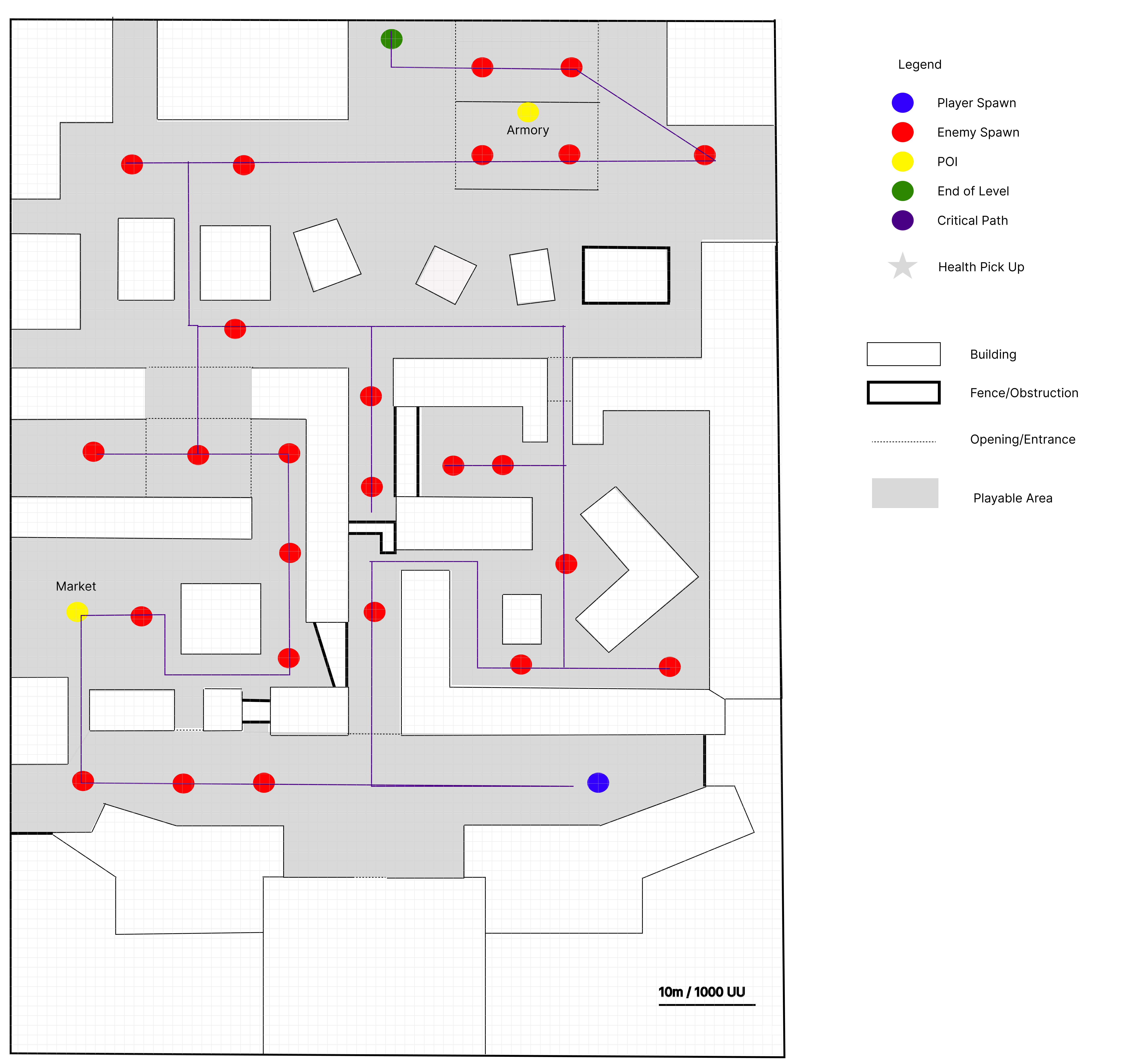
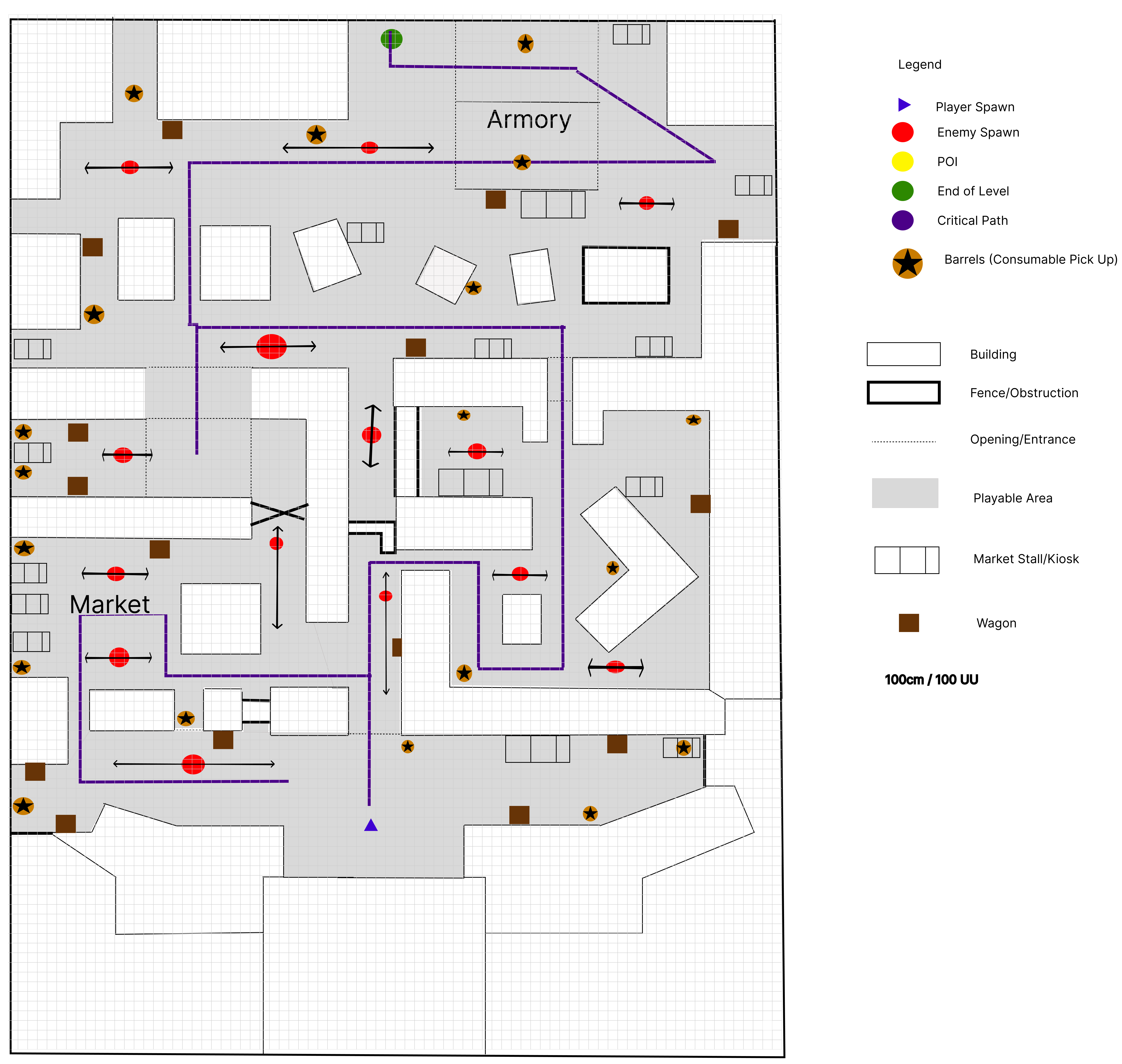
The level began with map layout sketches and planning. The challenge was to create a map that stayed
to scale while still feeling visually interesting and easy to navigate. The city needed recognizable
routes, areas of interest, and believable pathways.
Design Breakdown
Focus 01
Map Layout & Scale
Design Intent: Build a city layout that felt natural while keeping the player oriented
and encouraging movement through important areas.
- Created map layout sketches to plan the city before engine implementation.
- Focused on scale, navigation, and visually interesting routes.
- Used city structure to support combat flow and cinematic framing.
Focus 02
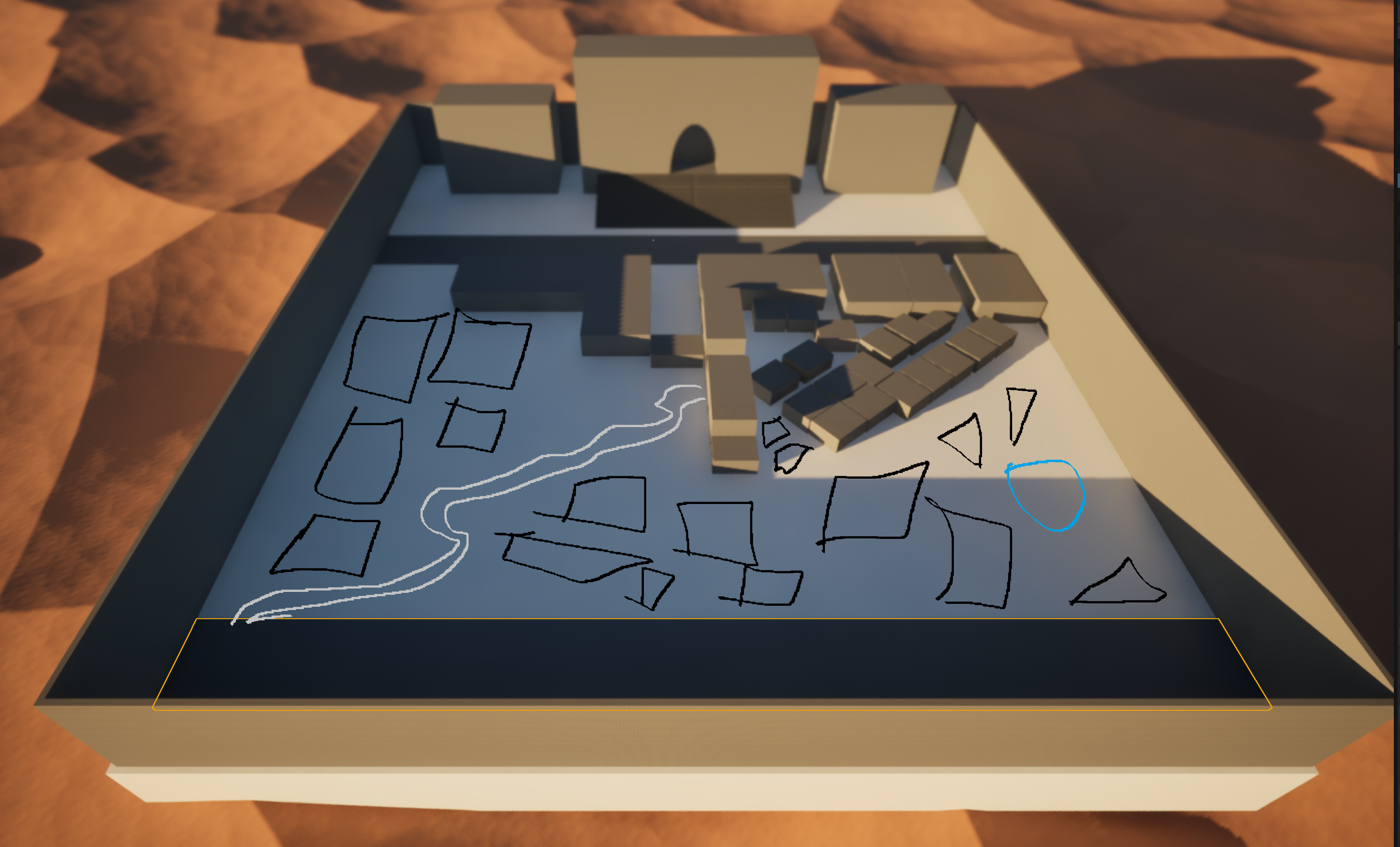
Blockouts & Player Pathing
Design Intent: Use blockouts to test building placement, sightlines, and player curiosity
before committing to final art and set dressing.
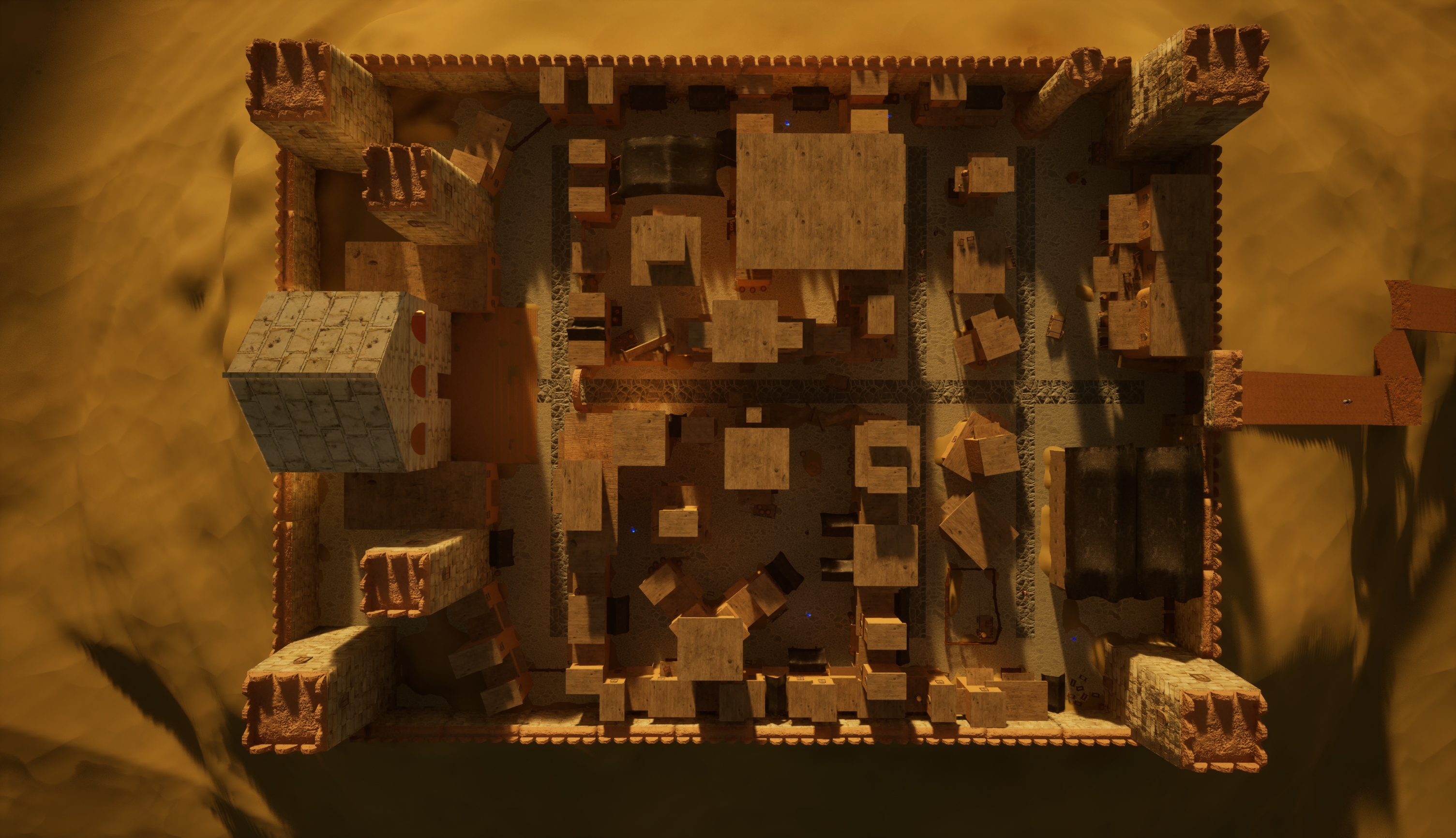
- Fine-tuned building layout and player pathing through blockout passes.
- Used vertical buildings to create line-of-sight goals and navigation references.
- Placed openings and alleyways to pull player curiosity through the city.
- Compared layouts to identify which spaces felt natural and which needed revision.
Focus 03
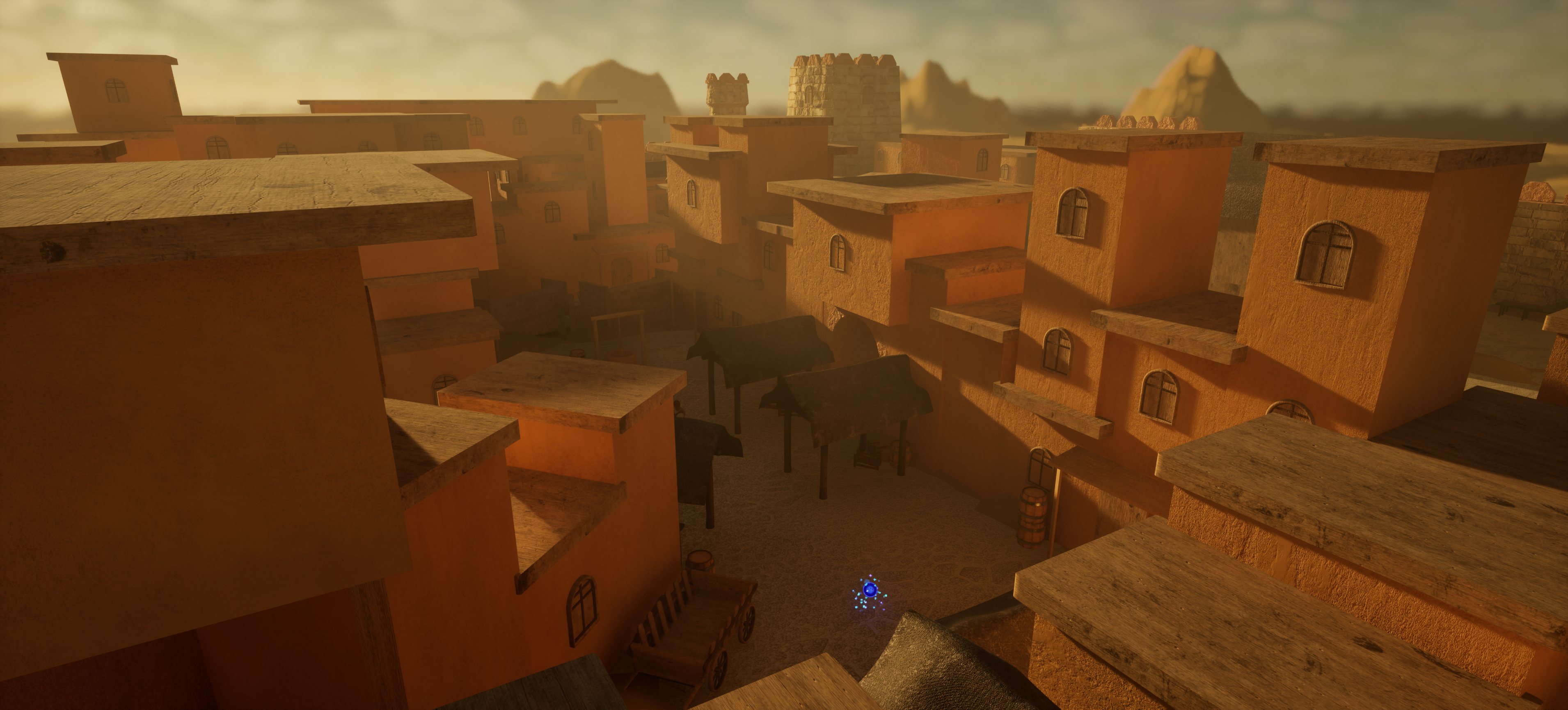
Set Dressing & Kitbashing
Design Intent: Use artist-created assets to shape the level into a believable city while
still maintaining clear player routes and strong readability.
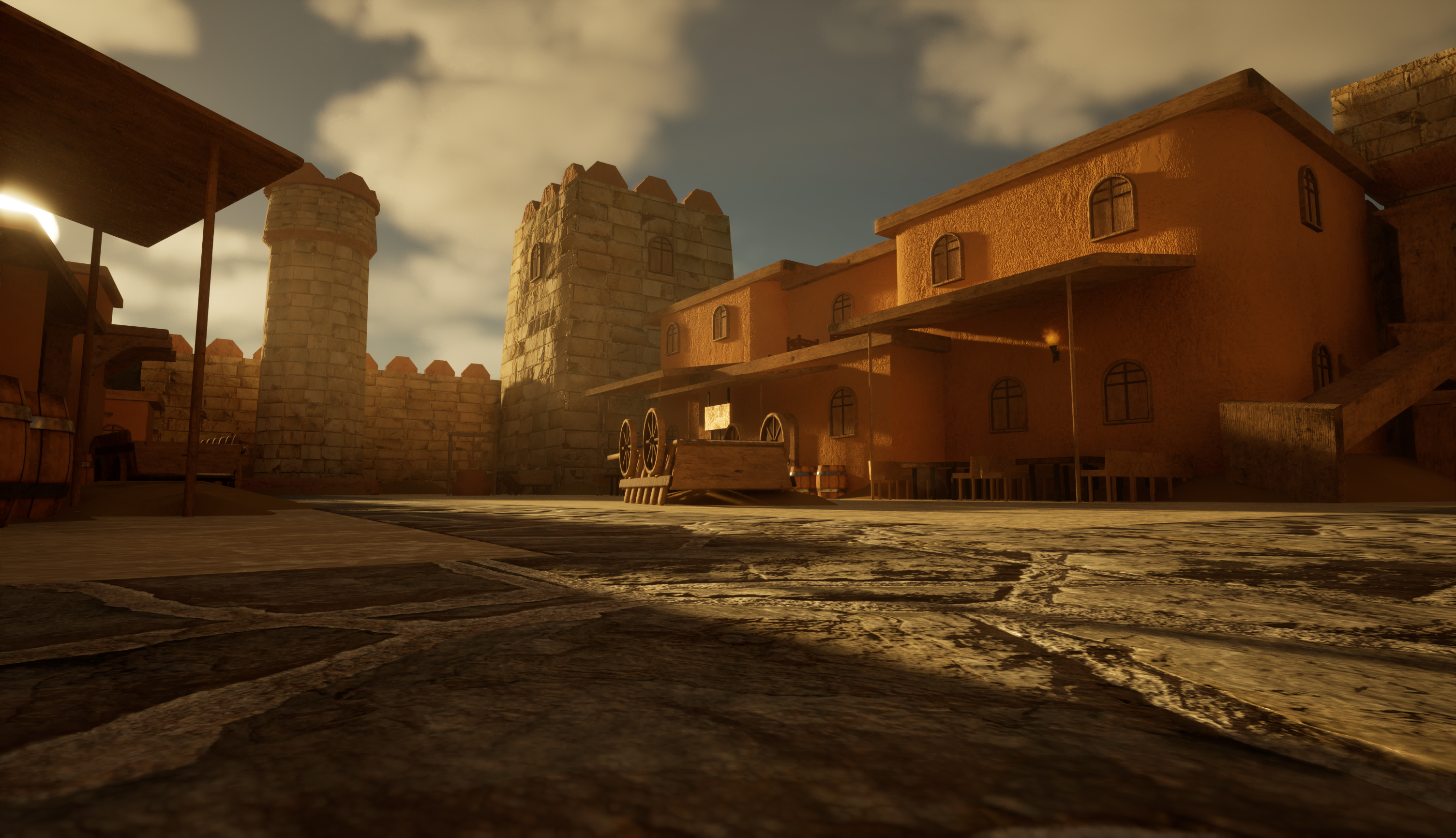
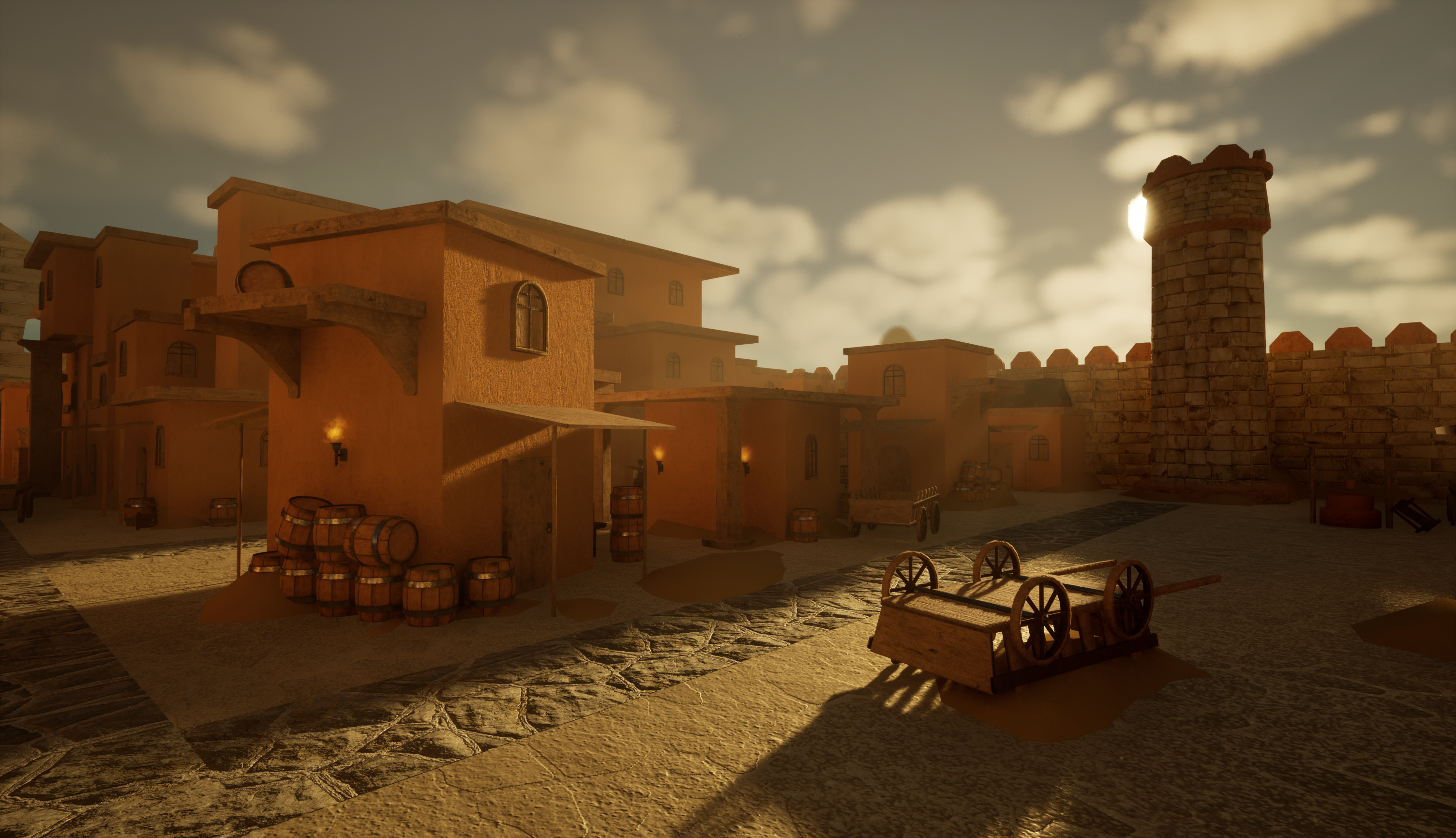
- Set dressed roughly 3/4 of the level through kitbashing.
- Fine-tuned line of sight, shadows, and environmental composition.
- Created navigable pathways so players could successfully move through the city.
- Populated the city with props, torches, enemies, and gameplay elements.
Focus 04
Level Sequences & Cinematics
Design Intent: Establish gameplay tone through fast-paced, energetic cinematics that
transition smoothly back into player control.
- Designed and implemented in-game cinematics using Unreal Level Sequencer.
- Used camera blending, timing, and blocking to transition smoothly between cinematic cameras and gameplay cameras.
- Animated characters per cutscene to support narrative and action beats.
- Designed cinematic moments to support the pacing and tone of hack-and-slash gameplay.
Focus 05
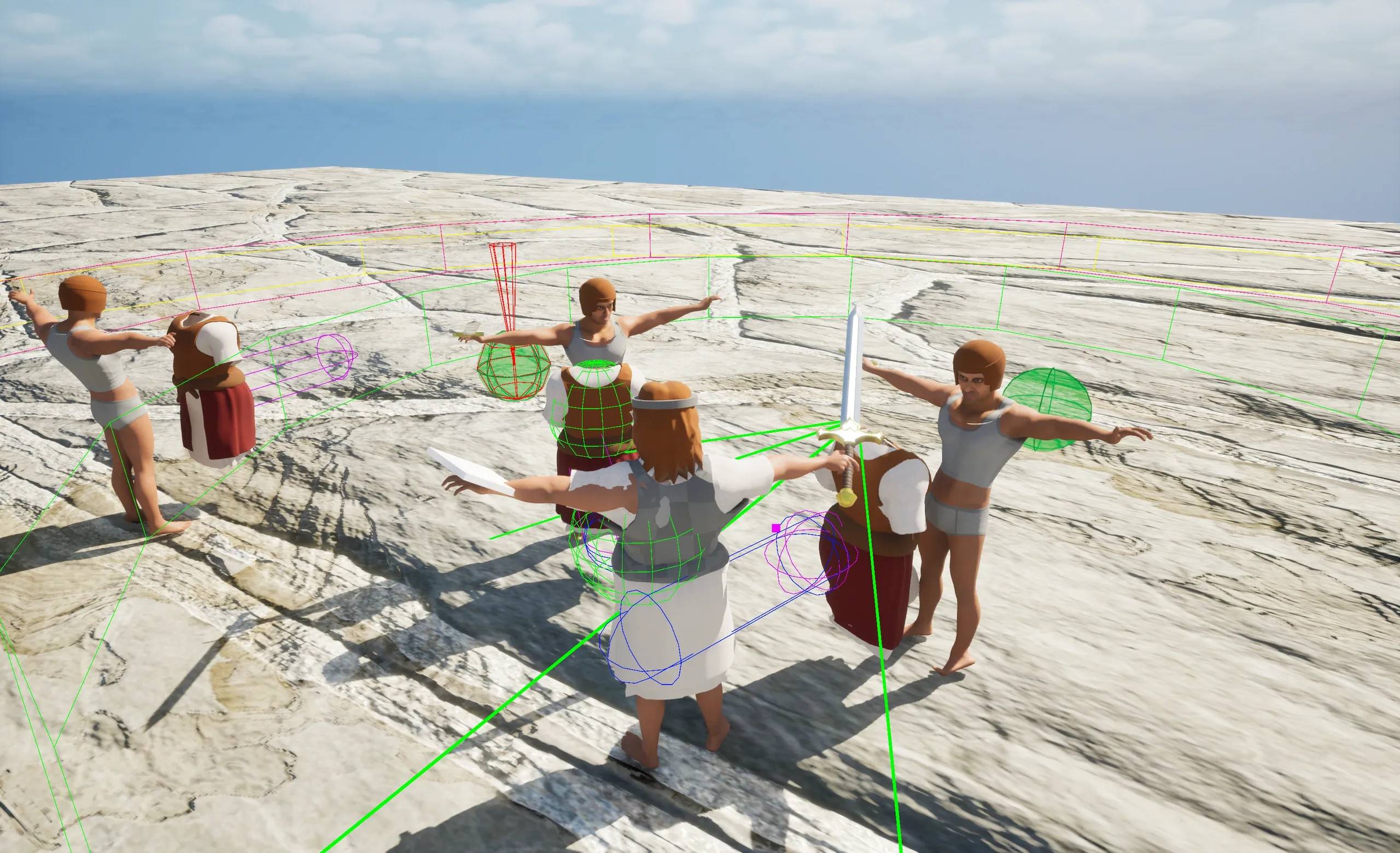
Enemy AI Systems
Design Intent: Create enemy combat behavior that could pressure the player through AI
perception, behavior trees, and environmental queries.
- Implemented enemy AI systems using Behavior Trees and Sub-Trees.
- Used AI Perception to detect and react to the player.
- Used EQS systems to support enemy decision-making and positioning.
- Connected AI behavior to the overall combat and encounter pacing.
Process & Documentation
Level, Cinematic, and AI Development
My process combined layout planning, blockout iteration, set dressing, cinematic sequencing,
and systems implementation. Since the project required both design and programming responsibilities,
I focused on keeping the level structure organized while connecting gameplay moments to enemy AI,
props, and cinematic triggers.
- Planned the level through sketches and layout documentation.
- Iterated blockouts to refine pathing, line of sight, and area readability.
- Used level streaming to organize and optimize the environment.
- Implemented enemy AI, props, torches, and gameplay systems to populate the city.
- Created cinematic sequences and blended them into gameplay flow.
Conclusion & Learnings
David's Mighty Men strengthened my ability to work across multiple disciplines in Unreal Engine:
level design, cinematic design, level streaming, set dressing, and AI systems. The biggest challenge
was keeping the level navigable and readable while also supporting combat, cinematic beats, and technical optimization.
Knowledge Gained
- Improved understanding of city layout, scale, and navigable player flow.
- More experience with blockout iteration and level readability.
- Stronger use of Level Sequencer, camera blending, and cinematic timing.
- Hands-on experience implementing Behavior Trees, AI Perception, and EQS-based systems.
- Better understanding of level streaming for organization and optimization.
Areas for Growth
- Continue improving documentation of encounter flow and enemy placement.
- Add more annotated before/after comparisons from blockout to final environment.
- Refine cinematic-to-gameplay transitions for smoother player control handoff.
- Further optimize large city areas through streaming and sublevel organization.
← Back to Projects Page